
Repiping & Pipe Repair
Slab leak reroutes, whole-house repipes in Type A PEX, and repairs on copper, galvanized and drain lines
Big job? Financing is available, with 0% APR options through Wisetack.
See Financing Options →Repair or Repipe?
Do I Need a Pipe Repair or a Whole-House Repipe?
It depends on how much of the system is failing. A single bad section of copper can usually be cut out and pressed back together in minutes. A leak under the slab usually gets a reroute, which generally runs $3,000 to $5,000. When the pipe throughout the house is worn out, as with 60-year-old galvanized, a repipe is the fix we recommend, and a typical whole-house repipe runs $10,000 to $20,000.
- ✓Whole-house repipes in Type A PEX
- ✓Slab leak reroutes through the attic or crawl space
- ✓ProPress repairs on copper
- ✓Galvanized pipe replacement in older homes
- ✓Drain pipe repairs inside walls
- ✓Leak detection from $275
What We Cover
Services We Provide
Whole-House Repipes
When the whole system is failing, we repipe in Type A PEX, usually through the attic. A typical whole-house repipe runs $10,000 to $20,000.
Slab Leak Reroutes
Instead of jackhammering the floor, we run a new line up and over the slab. A reroute generally costs $3,000 to $5,000.
Copper Repairs
On copper, we cut out the bad section and press in a ProPress repair in minutes, with no wait for the system to drain for soldering.
How We Work
Why Choose Regal?
Free Camera After We Clear It
On a drain call we cable the line first, then we typically run a camera through it free of charge as a courtesy, so you can see why it backed up.
Shielded Bands, Not Rubber
On sewer repairs we typically use a heavy-duty Husky band with a full metal shield, not the rubber Fernco band held on by two hose clamps.
30 Minutes to an Hour on Emergencies
A real person answers around the clock, and we can typically reach an emergency call within 30 minutes to an hour.
1-Year Warranty on Labor
Our labor comes with a 1-year warranty. Anything we note on your invoice as not covered by warranty isn't included.
Explore
Other Services We Offer
Emergency Plumbing
Rapid-response emergency plumbing for Ontario, CA and surrounding cities. We’re on call around the clock.
Learn More about Emergency Plumbing →Drain Cleaning
Professional clearing of kitchen, bathroom, and main sewer line blockages.
Learn More about Drain Cleaning →Sewer Line Repair
Camera inspection, trenchless repair, and full sewer line replacement.
Learn More about Sewer Line Repair →Water Heater Services
Installation and repair of tank, tankless, and heat pump water heaters.
Learn More about Water Heater Services →Slab Leak Detection
We find slab leaks with acoustic equipment, by pressurizing the line and with thermal equipment, then reroute most of them through the attic.
Learn More about Slab Leak Detection →Hydrojetting
High-pressure water jetting to scour pipe walls and restore full flow.
Learn More about Hydrojetting →Gas Leak Detection
Gas line leak detection and repair.
Learn More about Gas Leak Detection →Water Filtration
Whole-home water softeners and filtration systems installed.
Learn More about Water Filtration →Commercial Plumbing
Commercial plumbing service for businesses.
Learn More about Commercial Plumbing →Service Coverage
Cities We Serve
We serve these cities from our shop in Ontario.
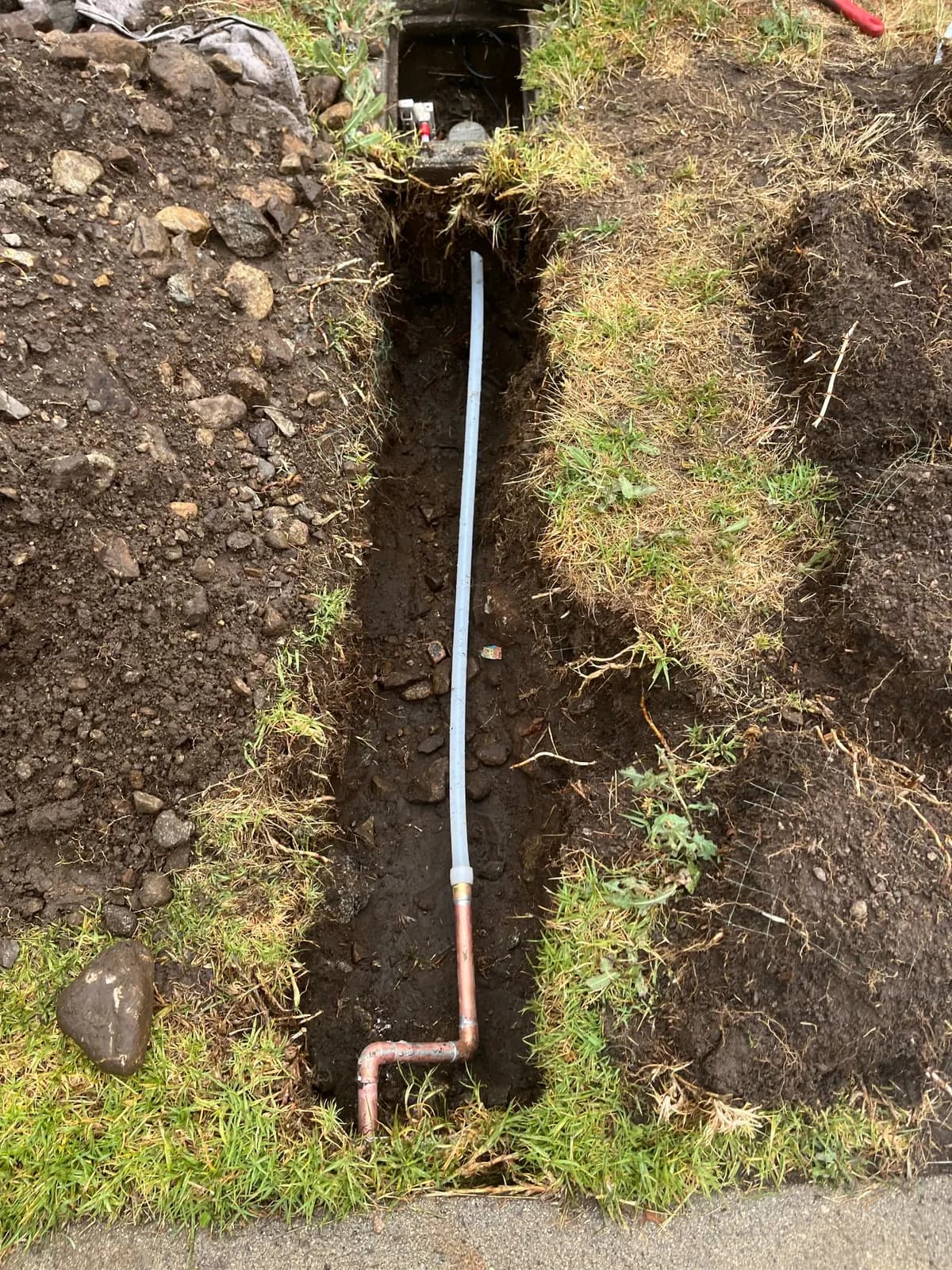
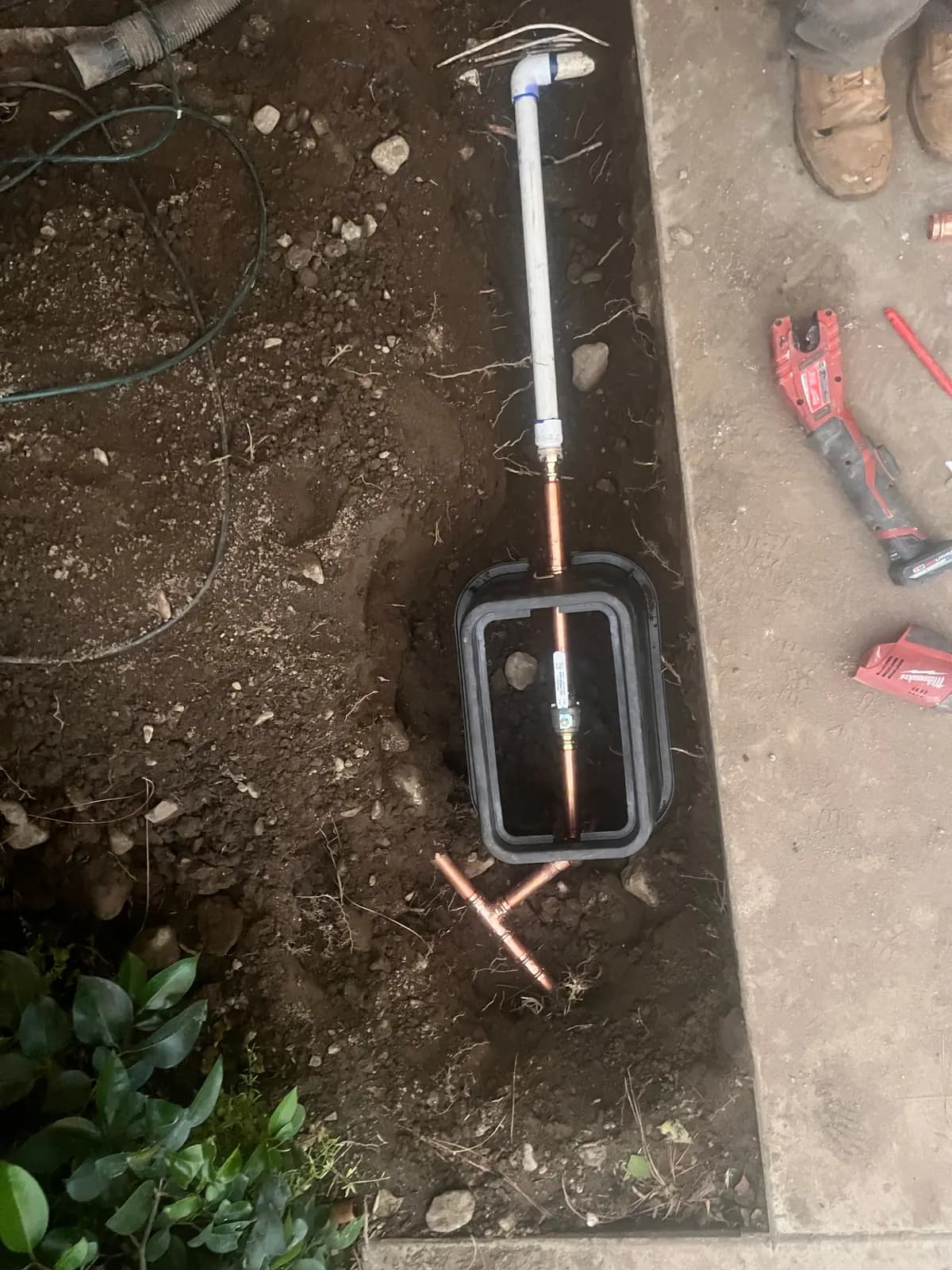
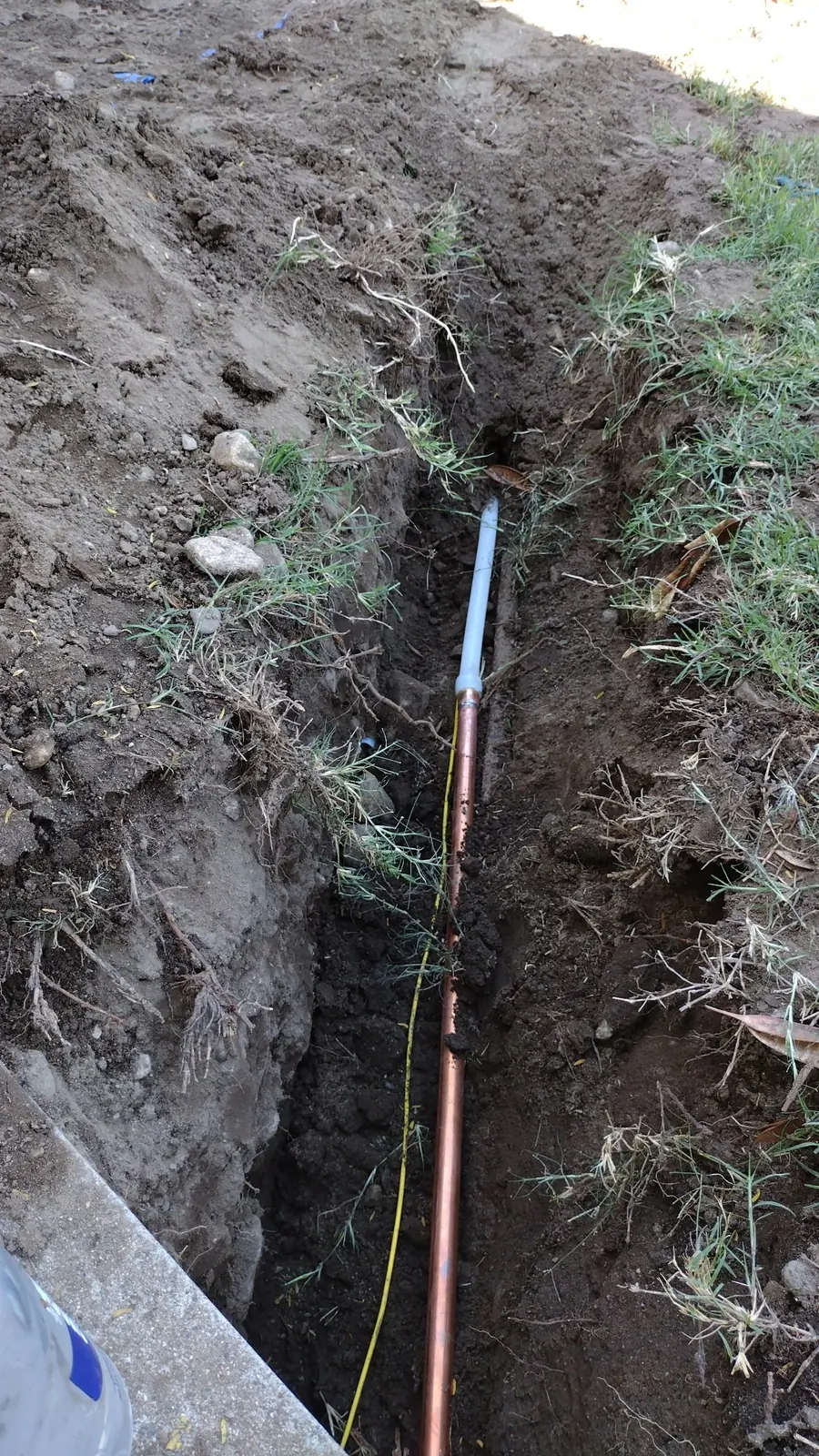
Real Photos
From Recent Jobs
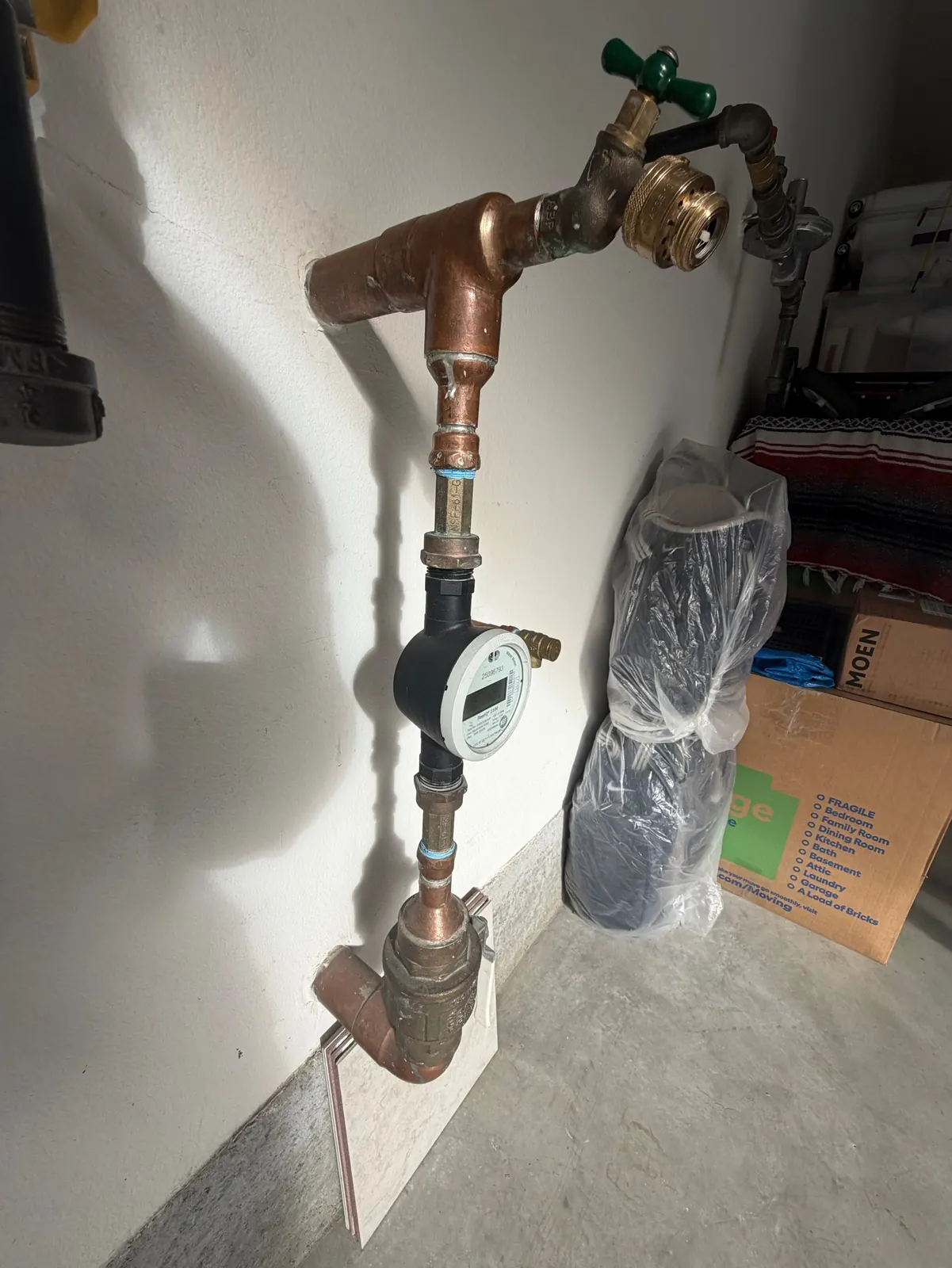
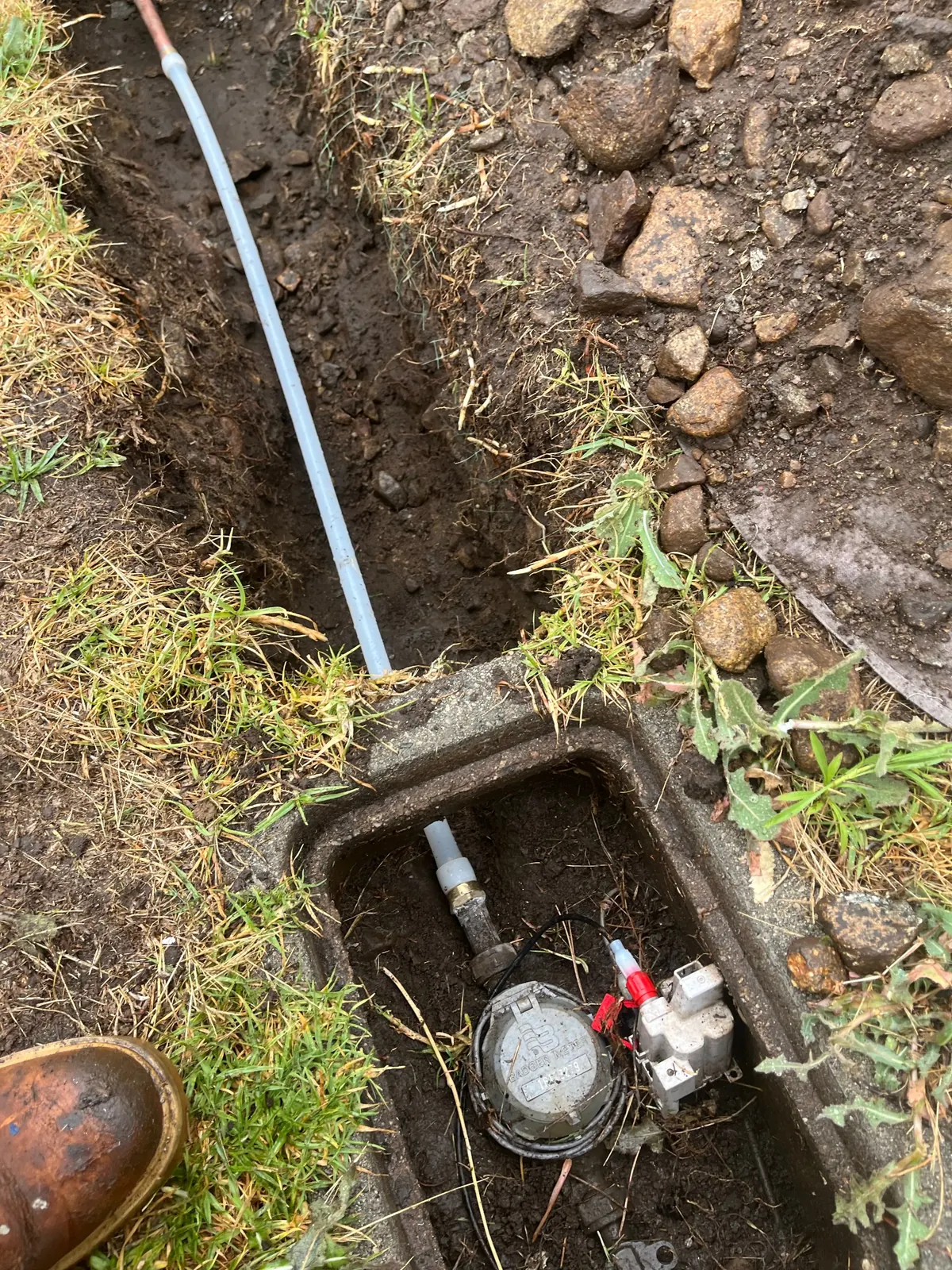
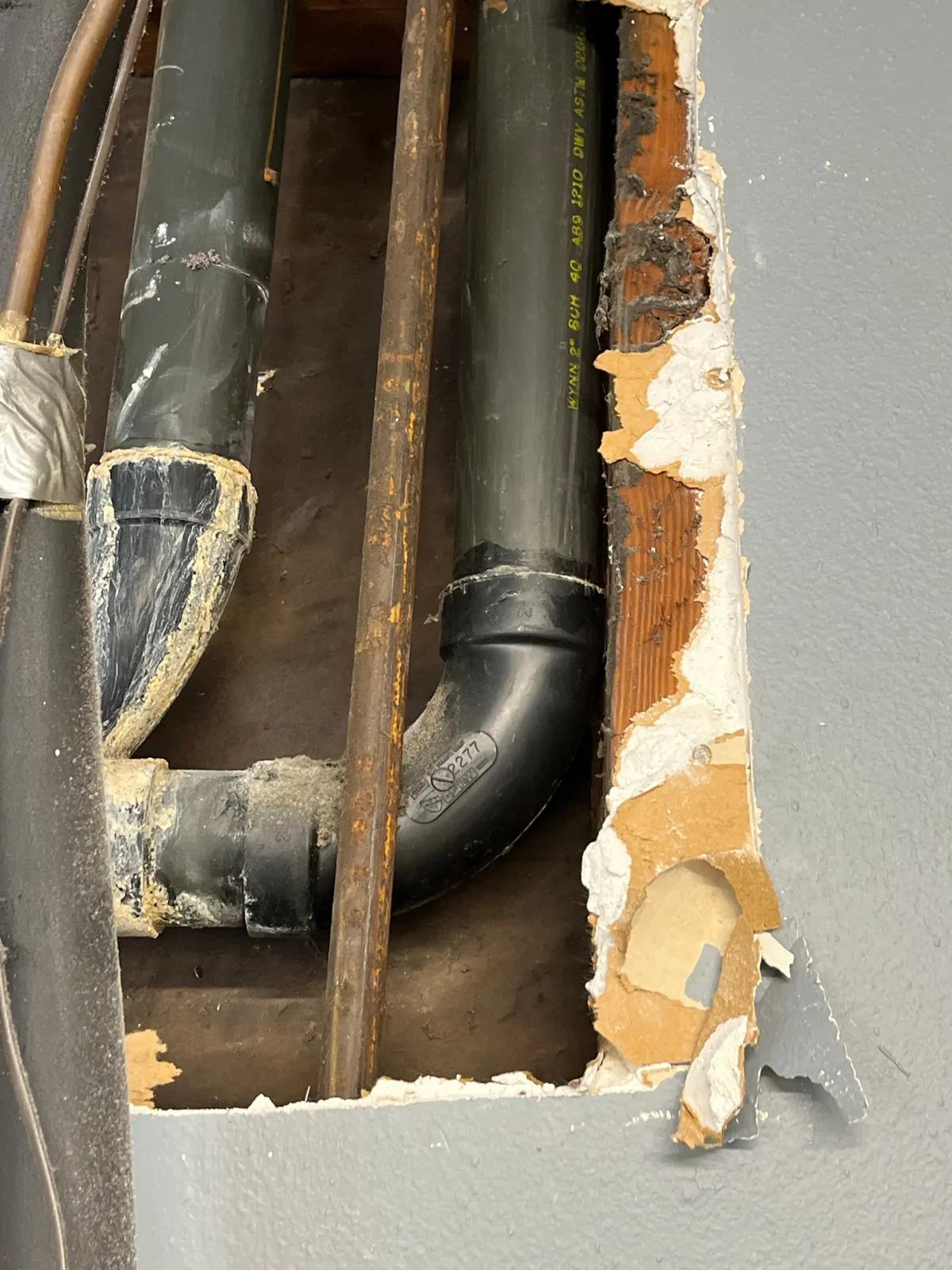
Reroute or Repipe
Should I Repipe or Reroute a Slab Leak?
For a single slab leak, we usually reroute. Instead of breaking up the floor to reach the leak, we run a new line up and over, most often through the attic in Type A PEX, or through the crawl space if the house has one. A reroute generally costs $3,000 to $5,000, and our slab leak detection page explains how we find the line that failed.
The bigger question is what comes next. A slab leak is a sign the plumbing system is slowly wearing out, and in our experience one slab leak is usually followed by another. That is why we always offer a repipe as an option alongside the reroute.
In Fontana, homes built from the '70s through the early 2000s are starting to show slab leaks, and in North Fontana we usually handle them with a reroute. More on that on our Fontana plumbing page.
Galvanized Pipe
Why Can't You Just Patch Old Galvanized Pipe?
Because old galvanized tends to fall apart while you are trying to fix it. A spot repair under the slab starts with jackhammering through the concrete to expose the bad section. That section gets cut out, and the new piece is joined with mechanical couplings, often called Baker couplings, which grip by squeezing down on the pipe.
Galvanized pipe that has sat in the soil for 60 years often can't take that squeeze, and it crumbles. At that point the floor is already open and the repair still hasn't been made. On a 1960s galvanized house, that is why we steer homeowners toward a repipe instead.
Older Homes
Which Homes Are Most Likely to Need a Repipe?
Homes built in the '50s and '60s, which were plumbed with galvanized pipe. In old Fontana, roughly south of Baseline, a lot of our work on those homes is repipes and water service replacements. See our Fontana page for more on what we find there.
Ontario has plenty of '50s and '60s homes too, most of them on slab, with galvanized and cast iron piping. Cast iron gives you about 50 years before it starts rotting out from the bottom, where waste runs through it constantly. Read more on our Ontario plumbing page, and see sewer line repair for drain and sewer lines.
Copper Pipe
Why Does Copper Pipe Fail in Our Area?
Mostly because of what was installed and what runs through it. Many homes here were built with rolled soft copper, much of it Type M, a thin-walled copper used to keep building costs down. Our hard water wears through that copper faster than softened water would.
The ground and the pressure add to it. Frequent small quakes shift buried pipe against rocks, and years of that rubbing wear it thin. High water pressure makes the water tumble at every elbow and fitting, eroding the pipe right at that spot.
We set every water pressure regulator we install to 65 to 70 PSI, and a water softener slows the mineral wear.
On the Job
What Did a Galvanized Slab Leak Look Like in Rialto?
A 1960s home in Rialto had galvanized pipe running under the slab. The owners noticed the tile grout darkening in one spot. They assumed it was from mopping, but after weeks the dark patch was still in the same place, and the water bill had gone up.
Dark grout means moisture is being held in it. We ran leak detection with acoustic equipment and pressure testing, and injected nitrogen into the line so the leak would be louder and easier to pin down. It confirmed a slab leak.
The choices were to jackhammer the floor and try to replace the bad section, or repipe. With 60-year-old galvanized, the spot repair was a poor bet, so the homeowner went with a full repipe through the attic in Type A PEX. Their insurance covered part of the repipe.
Pricing
How Much Does a Repipe Cost?
A typical whole-house repipe runs $10,000 to $20,000. For a three-bathroom house, the range is usually $13,000 to $19,000, and where you land depends on the size of the house and how the layout runs.
If only one line under the slab has failed, a reroute generally costs $3,000 to $5,000. Leak detection to find the bad line starts at $275 and goes up with the extent of the work, such as tracing the line with acoustic equipment or pressurizing it with gas and using a gas sniffer. Estimates are free.
Insurance
Does Insurance Cover a Repipe?
Sometimes it covers part of it. On the Rialto galvanized job, the homeowner's insurance paid for a portion of the repipe.
In general, insurance typically covers the water damage, and it usually pays to open and close the access, such as cutting the drywall and putting back the texture and paint. The new pipe itself usually isn't covered.
Insurers also don't like a known leak that was left alone, and they can deny the claim as neglect. If you suspect a leak, have it looked at right away.
Drain Pipe in the Wall
What Happens When a Screw Hits a Drain Inside a Wall?
You end up with a leaking drain inside the wall, and fixing it means opening the wall. On a job in Rialto, a screw from a curtain installation had gone into a 3-inch drain. The curtains had been up for some time, and by the time we were called the homeowners were smelling sewer gas and seeing water damage show up on the wall.
The drain sat in an awkward spot, between two windows and sandwiched between two structural beams that hold the house up. We had to cut out the damaged pipe and fit the new piping with real care, and we opened the ceiling plus a good part of the wall to do it.
Before you drill near a bathroom, kitchen or laundry, check what is above you and on the other side of the wall. A stud finder helps you hit studs, but what it picks up could also be a pipe. This homeowner simply got unlucky.
A leaking drain under an upstairs toilet can show up as a stain on the ceiling below. See how we traced two toilet leaks to the flange.
Materials
What Pipe Do You Use, and Is CPVC a Problem?
For reroutes and repipes, we run Type A PEX, usually through the attic. For a break in copper, we use a ProPress tool: we cut out the bad section and press in a repair in minutes, without waiting for the whole system to drain the way soldering requires.
CPVC is not a pipe we like to see. One CPVC line burst in a townhouse attic on a Friday after 5 PM, flooding the unit from top to bottom and starting into the neighbor's unit. If a line has already let go, see our burst pipe repair page.
We also see a lot of do-it-yourself pipe repairs made with the wrong materials or the wrong method, and those tend to leak again later.
Common Questions
Frequently Asked Questions
Ask about our current specials when you call.
Leaking Pipe or Failing Galvanized? Call Us
Free estimates on repipes, reroutes and pipe repairs
(909) 600-4561Call Now