
Slab Leak Detection
We find the line that is leaking, then reroute it instead of cutting into your slab
Big job? Financing is available, with 0% APR options through Wisetack.
See Financing Options →Find It, Reroute It
What Is the Best Way to Fix a Slab Leak?
For most homes, a reroute. Once we know which line is leaking, we run a new PEX line up through the attic, or under the house when it has a crawl space. That generally runs $3,000 to $5,000. Fifteen to 20 years ago, the standard approach was to cut the slab open and patch the pipe in place. We rarely do that anymore.
- ✓Acoustic and thermal leak detection
- ✓Nitrogen testing on hard-to-find leaks
- ✓Leak detection from $275
- ✓Line-by-line pressure testing at the manifold
- ✓PEX reroutes through the attic or crawl space
- ✓Spot repairs when a reroute is not possible
- ✓Whole-house repipes
Written by Nick Moore, Owner and C-36 Licensed Plumbing Contractor, CA Lic. #1097482
Third-generation plumber, 20+ years in the trade.
What We Cover
Services We Provide
Leak Detection
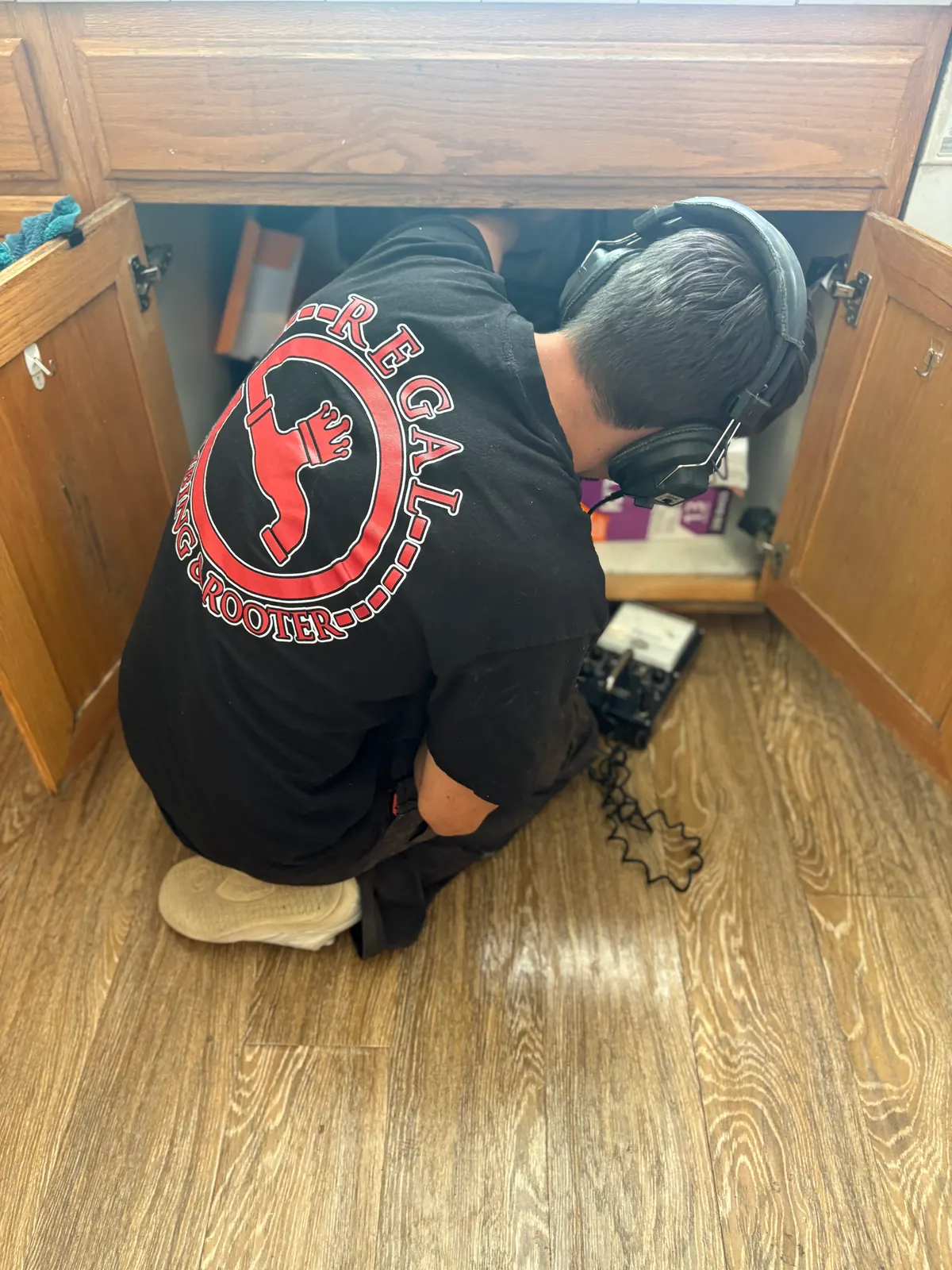
Acoustic equipment and line pressure testing, with thermal equipment for hot-side leaks. We isolate each line at the manifold to confirm which one is bad.
Reroutes
Our standard fix: a new PEX line run over the slab through the attic or crawl space, generally $3,000 to $5,000.
Repipes
One slab leak usually means more are coming. A whole-house repipe typically runs $10,000 to $20,000.
How We Work
Why Choose Regal?
Free Camera After We Clear It
On a drain call we cable the line first, then we typically run a camera through it free of charge as a courtesy, so you can see why it backed up.
Shielded Bands, Not Rubber
On sewer repairs we typically use a heavy-duty Husky band with a full metal shield, not the rubber Fernco band held on by two hose clamps.
30 Minutes to an Hour on Emergencies
A real person answers around the clock, and we can typically reach an emergency call within 30 minutes to an hour.
1-Year Warranty on Labor
Our labor comes with a 1-year warranty. Anything we note on your invoice as not covered by warranty isn't included.
Explore
Other Services We Offer
Emergency Plumbing
Rapid-response emergency plumbing for Ontario, CA and surrounding cities. We’re on call around the clock.
Learn More →Drain Cleaning
Professional clearing of kitchen, bathroom, and main sewer line blockages.
Learn More →Sewer Line Repair
Camera inspection, trenchless repair, and full sewer line replacement.
Learn More →Water Heater Services
Installation and repair of tank, tankless, and heat pump water heaters.
Learn More →Hydrojetting
High-pressure water jetting to scour pipe walls and restore full flow.
Learn More →Gas Leak Detection
Gas line leak detection and repair.
Learn More →Water Filtration
Whole-home water softeners and filtration systems installed.
Learn More →Pipe Repair
Expert pipe repair and replacement for copper, PVC, and galvanized systems.
Learn More →Commercial Plumbing
Commercial plumbing service for businesses.
Learn More →Service Coverage
Cities We Serve
We serve these cities from our shop in Ontario.
Warning Signs
What Are the Signs of a Slab Leak?
A wet spot on the floor is the most common reason we get called out. Water seeping up through the tile and damp carpet are close behind.
Quieter signs include a warm spot on the floor, a water bill that keeps climbing, and tile grout that darkens in one spot. Dark grout that stays in the same place after weeks means moisture is being held in it. If you see any of these, have the lines checked. If water is already coming up through the floor, call our emergency plumbers.
Detection
How Do You Find a Slab Leak?
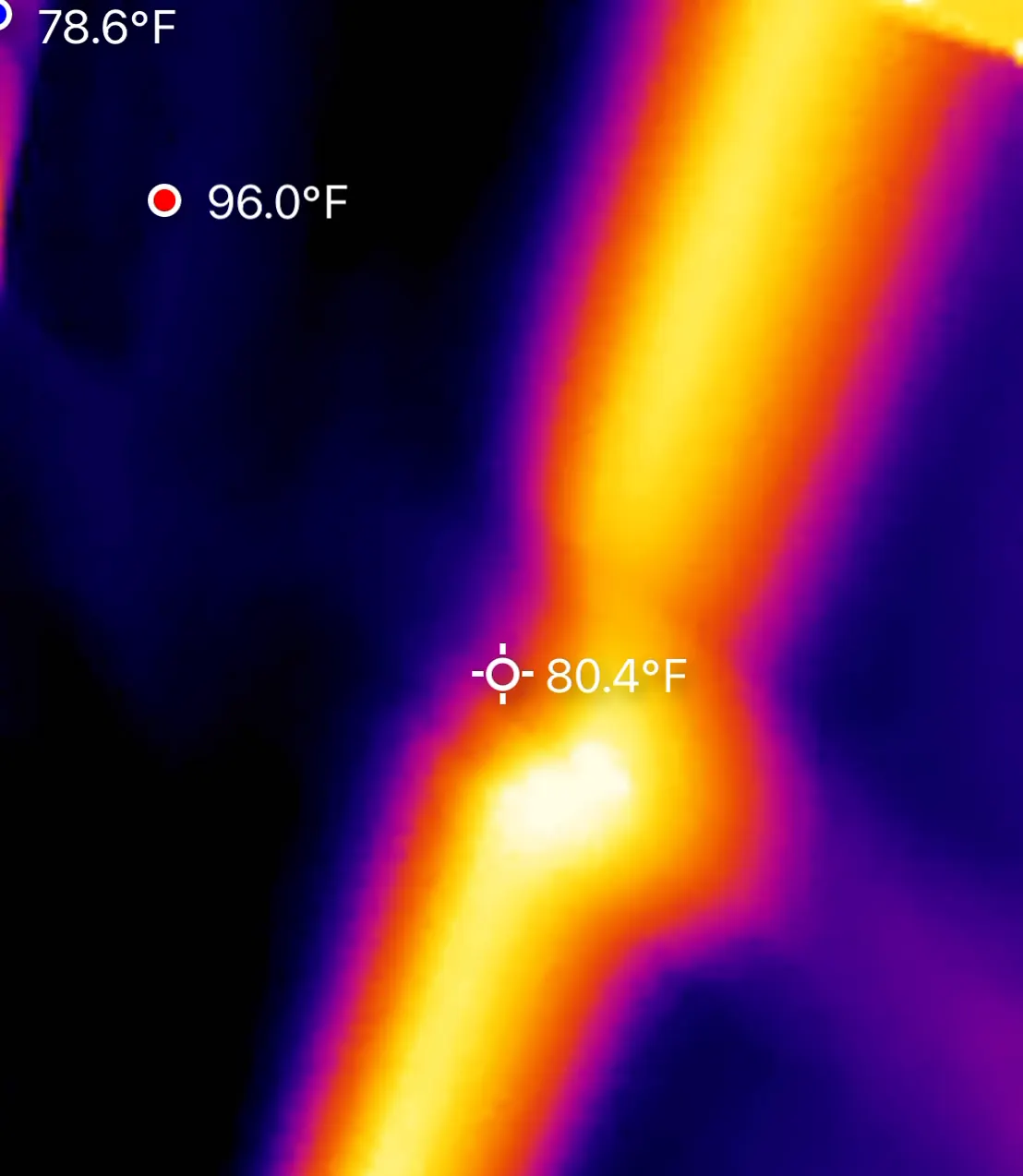
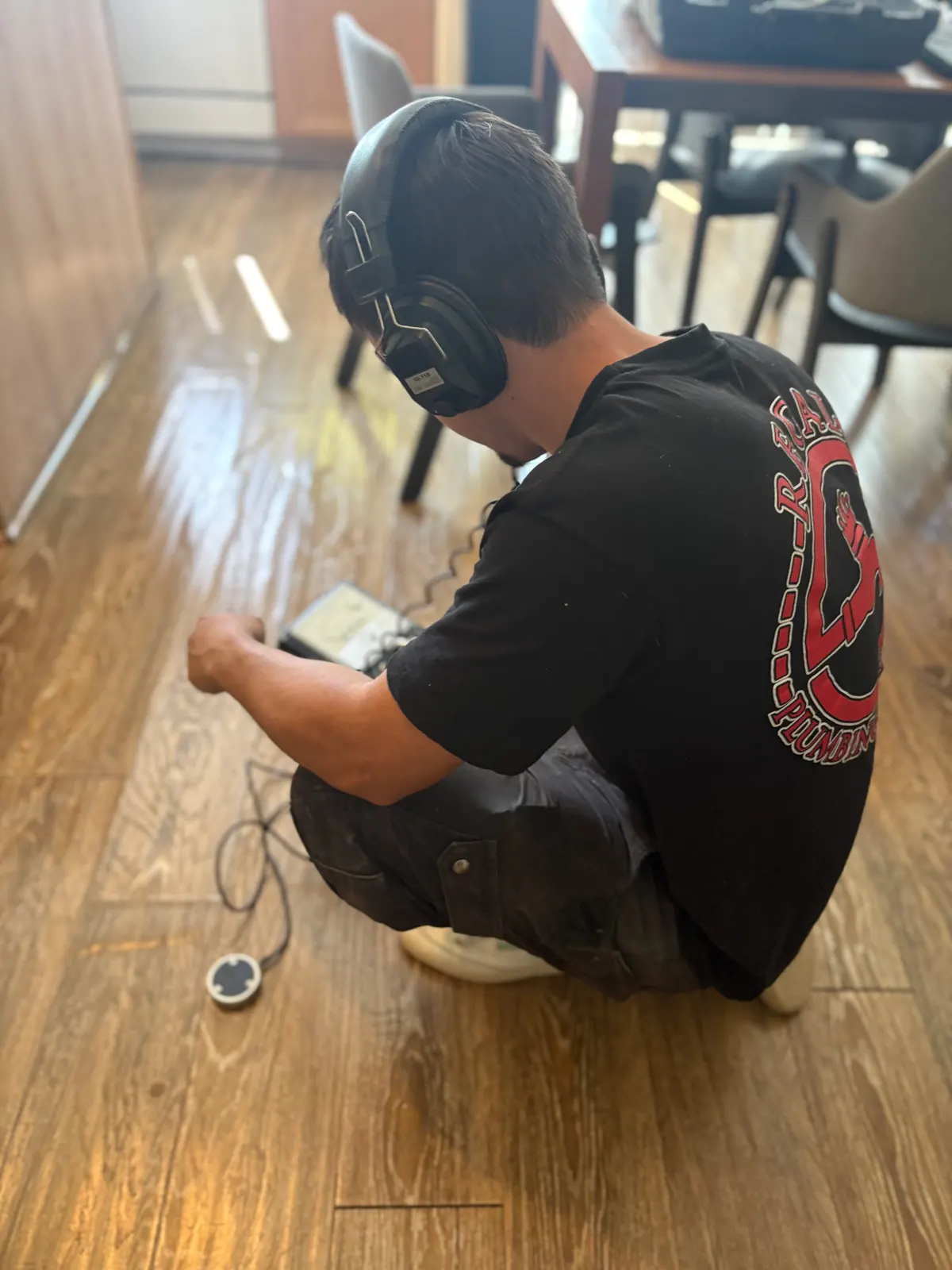
We pair acoustic listening equipment with pressurizing the line. When the leak is on the hot side, we bring in thermal equipment too.
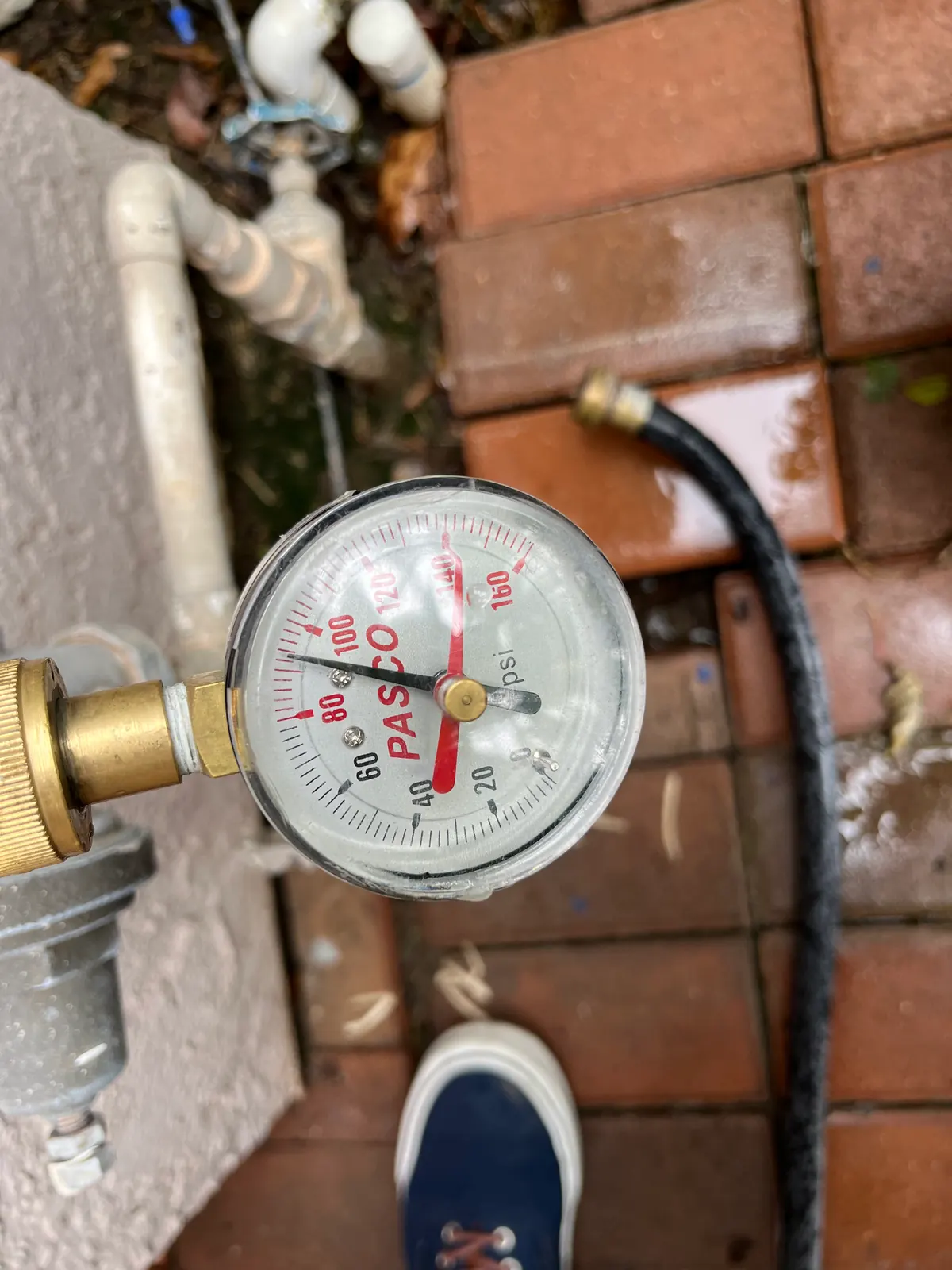
The most dependable test happens at the manifolds in the wall. We open them up, cap both ends of a single line and put it under pressure. A line that can't hold pressure is the one that's leaking. From there, we recommend rerouting it.
Some leaks are harder to hear. On those, we inject nitrogen into the line, which makes the leak louder for the acoustic equipment, and we can follow up with a gas sniffer to pick up exactly where the gas is escaping.
Pricing
How Much Does Slab Leak Detection Cost?
Leak detection starts at $275 and goes up from there depending on the extent of the work. A leak we can trace with acoustic devices costs less to find than one where we have to pump the line up with gas and track it down with a gas sniffer.
Once the bad line is found, a reroute generally runs $3,000 to $5,000. Estimates are free.
Hot vs. Cold
Do Hot or Cold Lines Leak More Often?
Hot lines. We see more slab leaks on the hot side than the cold.
A recirculation pump makes it worse, especially one with no timer. The pump keeps hot water moving through the pipes all day and night. It does have a benefit: hot water reaches the shower almost the moment you turn it on, so you aren't running a minute or two of water down the drain waiting for it. The tradeoff is constant hot water wearing on the lines.
Local Causes
Why Are Slab Leaks So Common Here?
Four things work against the copper under local slabs. The first is the pipe itself. Many homes in our area were built with rolled soft copper, much of it Type M, a thin-walled copper chosen to save money during construction.
The second is hard water. The minerals in our water wear through copper much faster than softened water does. Treating your water with a water softener slows that wear.
The third is the ground. Frequent small earthquakes shift the pipes slightly in the soil, so they rub against rocks. Years of that rubbing wears the pipe down.
The fourth, and one of the most common, is high water pressure. Every time fast-moving water hits an elbow or any fitting that turns it, the water tumbles, and it eats away at the pipe right where that tumbling starts. Bringing the pressure down with a water pressure regulator takes away that extra wear.
Repair Options
Should I Reroute or Repair Through the Slab?
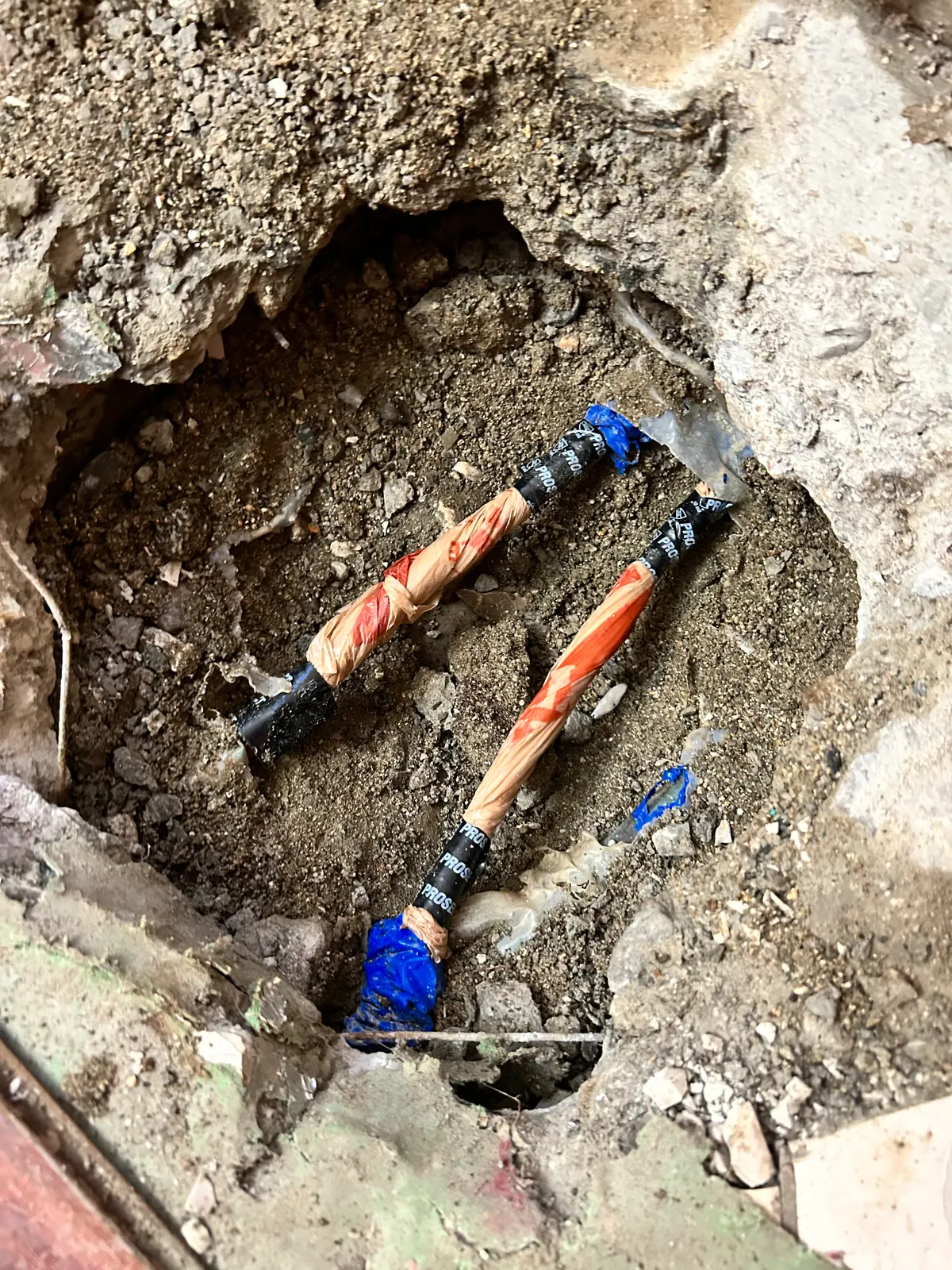
Reroute, in almost every case. We run a new PEX line up and over, usually through the attic, or through the crawl space when the house has one. A reroute generally costs $3,000 to $5,000.
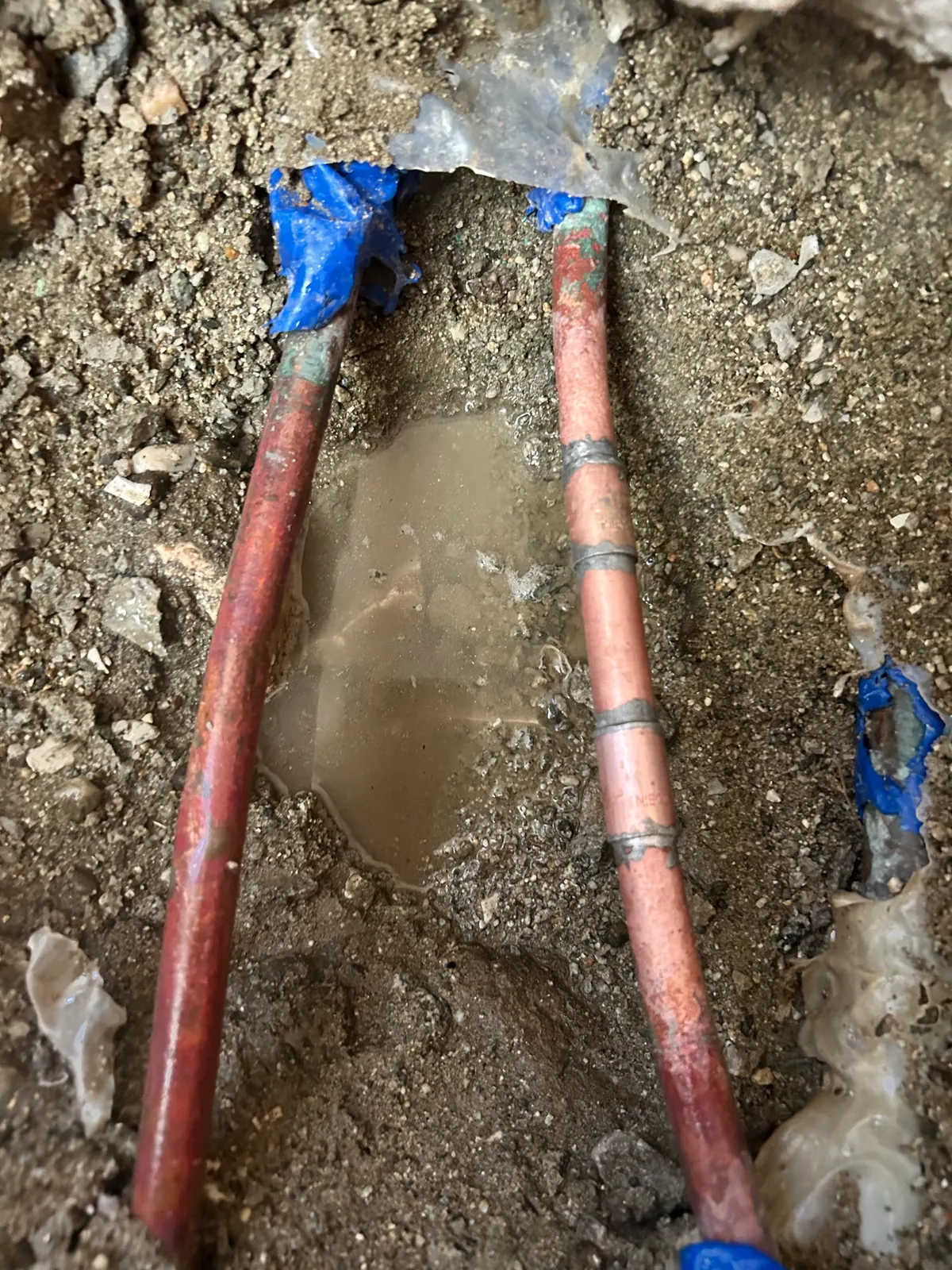
We only repair through the slab when a reroute isn't realistic, usually because the house has vaulted ceilings. A spot repair means jackhammering through the foundation, which weakens it. It also means breaking tile or pulling up carpet, and since the existing flooring almost never matches, the whole floor often has to be replaced.
Repiping
Should I Repipe After a Slab Leak?
It's worth a serious look. One slab leak is usually a sign the whole plumbing system is wearing out, and the next leak tends to follow.
That's why we always offer a repipe alongside the reroute. A typical whole-house repipe runs $10,000 to $20,000, and a three-bathroom repipe usually lands between $13,000 and $19,000. See our pipe repair and repiping service for more.
Insurance
Does Insurance Cover a Slab Leak?
The water damage is typically covered. The catch is timing: insurers don't like a leak you knew about and left alone, and they can deny the claim as neglect. We've seen it happen many times, so if you suspect a leak, have it handled right away.
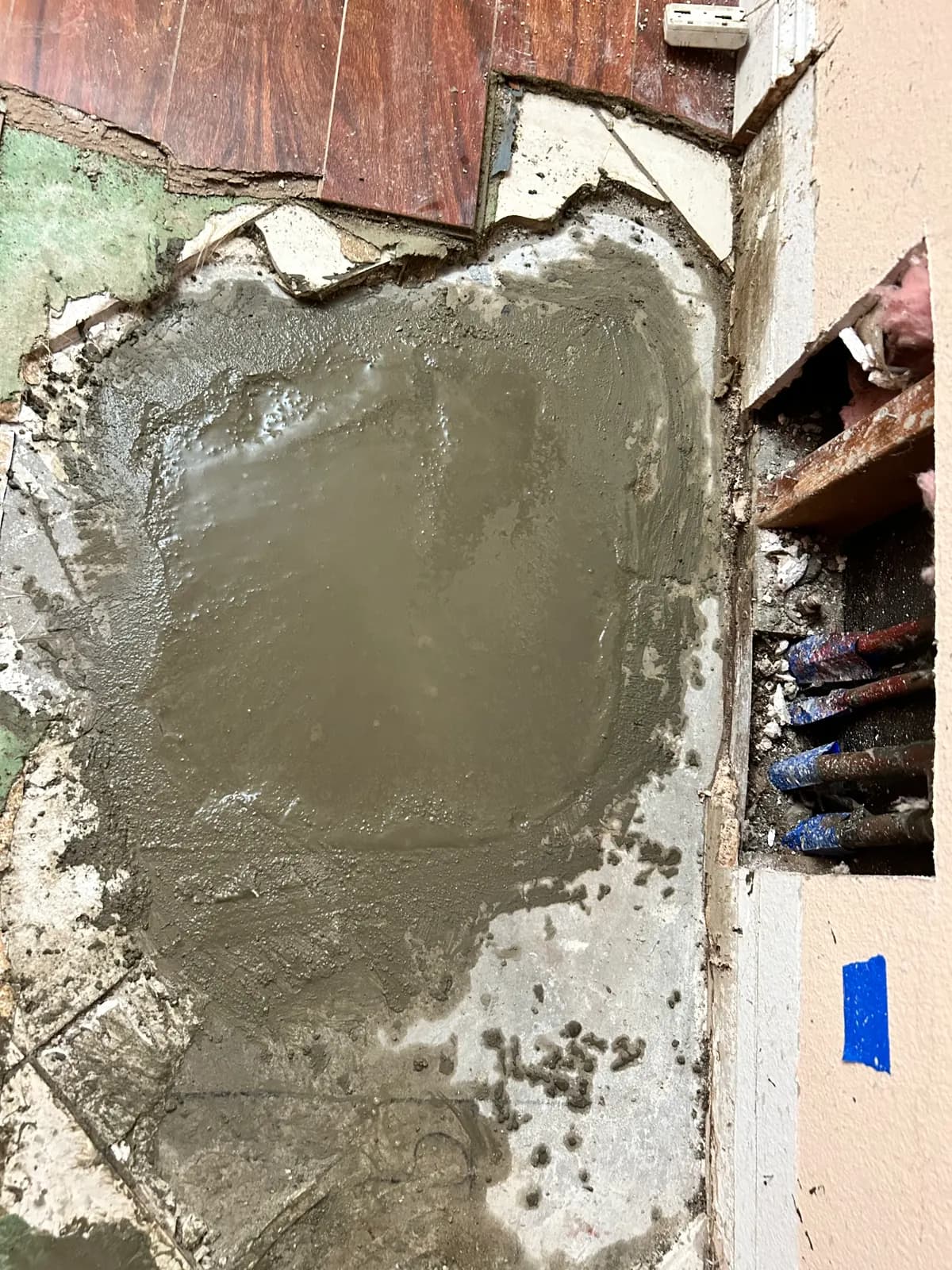
For the repair itself, insurance usually pays for the access and putting it back. On a reroute, that means opening the drywall, closing it, and restoring the texture and paint. On a spot repair, it means breaking through the floor and then replacing the concrete and tile. What they usually don't pay for is the new pipe.
Waiting
What Happens If I Wait to Fix a Slab Leak?
It gets worse. A slab leak never heals on its own. The hole keeps growing, more water escapes, and the damage spreads.
A smart water shutoff such as the Moen Flo can run a nightly micro leak test that flags a small slab leak before it works its way up into the house.
On the Job
What Does a Slab Leak in Old Galvanized Pipe Look Like?
On a 1960s home in Rialto with galvanized pipe under the slab, it started with the tile grout. The owners first blamed mopping, but after weeks the dark spot stayed in one area, and their water bill had gone up too.
We found the leak with acoustic equipment and pressure testing, adding nitrogen to the line to make it louder. Patching 60-year-old galvanized under the slab is a bad bet, because the couplings used for a spot repair squeeze down on the pipe and the old pipe can crumble. The homeowner chose a full repipe through the attic in Type A PEX, and insurance covered part of it. More on that choice on our repiping and pipe repair page.
On the Job
Why Is Hot Water Coming Out of My Cold Tap?
On one job, it was a slab leak doing double damage. We rerouted a leaking hot line, turned the water back on and found a second leak. Oddly, the house had also been getting hot water on the cold side.
The second leak was on the cold line, but once the hot line was fixed, no more hot water showed up in the cold side. The hole in the hot line had been spraying water straight into the cold line beside it, wearing a hole through it and pushing hot water into the cold plumbing. We rerouted both lines through the attic.
Real Photos
From Recent Jobs
Financing available. Learn about financing options.
Common Questions
Frequently Asked Questions
Ask about our current specials when you call.
Suspect a Slab Leak? Don't Wait
Slab leaks only get worse. Call to have the bad line found and fixed.
(909) 600-4561Call Now