
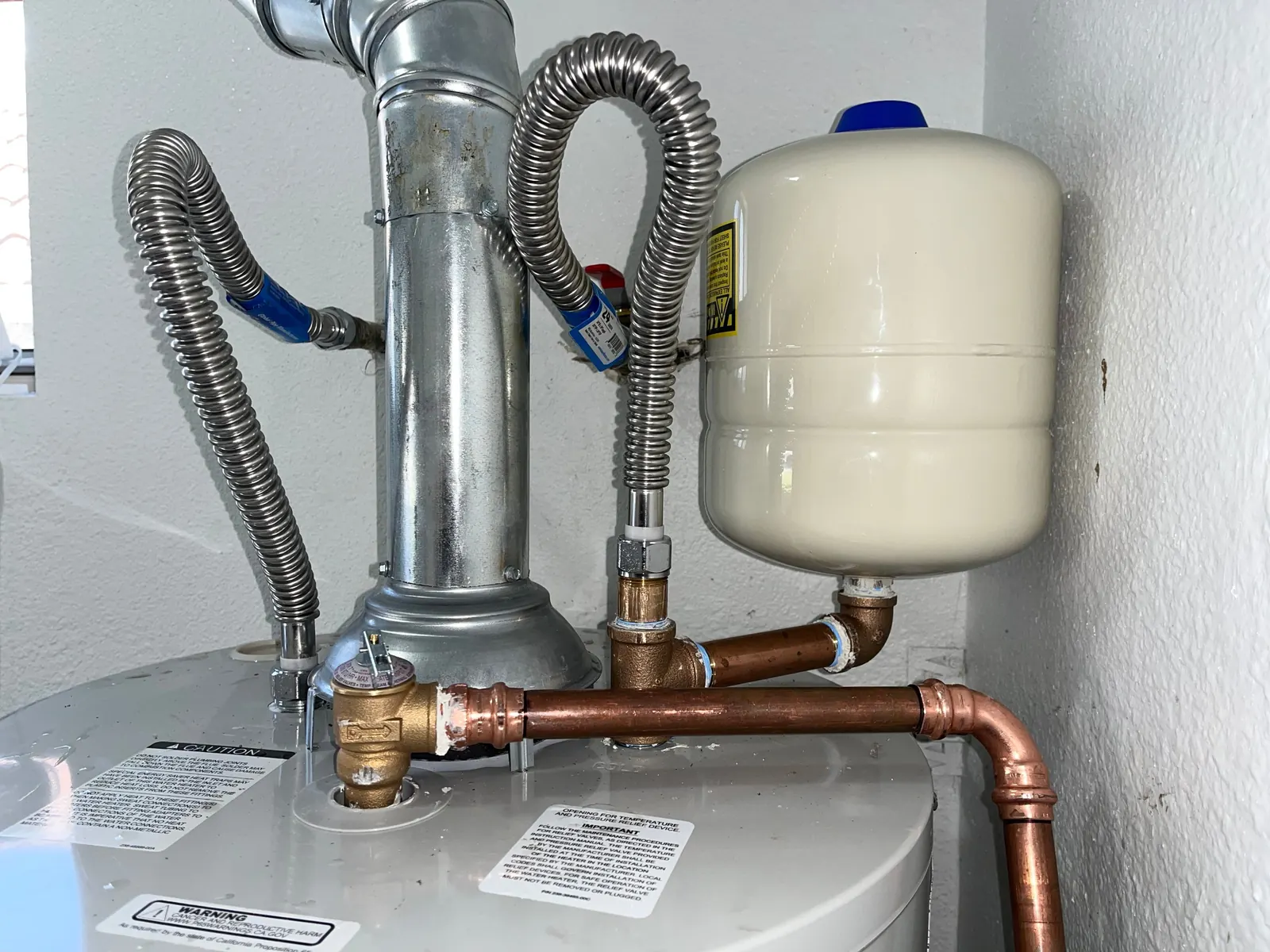
A homeowner in Etiwanda, in Rancho Cucamonga, called us because water was pouring out of the relief valve on their water heater. We knew the house. After an earlier leak, the heater had been temporarily set, and the homeowner had us come out to reset it.
At the time, we gave them two options: replace the heater, or add a thermal expansion tank. They chose to have it reset and nothing more. The missing expansion tank is what caught up with them.
Why was water pouring out of the relief valve?
Pressure in the system kept building, and the valve finally stuck open. The relief valve on a tank water heater is the T&P valve, short for temperature and pressure relief valve.
My read on this job was high thermal expansion. The home had no expansion tank, so each time the heater fired, the pressure built back up. After enough cycles of that, the T&P valve stuck open and kept dumping water.
Why does a missing expansion tank matter?
The water heater isn't the only thing that takes the strain. Without an expansion tank, the extra pressure works on all of the plumbing in the house.
We saw how high it can go on another job. The day after we installed a Moen leak detection device for a customer, he called us because it was reading 170 PSI, which is extremely high. When we went back to find out why, his water heater had no thermal expansion tank either. That job, and the other install mistakes we check for, are in our post on signs a water heater was installed wrong.
Leaving off the expansion tank and the sediment trap saves a little on install day, but over the years it takes a real bite out of the heater's life. The sediment trap catches sediment before it reaches the gas control valve, and when installers skip it, that valve is one of the parts we see fail. Every water heater we supply and install goes in with both.
What did we do on this job?
We replaced the T&P valve and installed a thermal expansion tank.
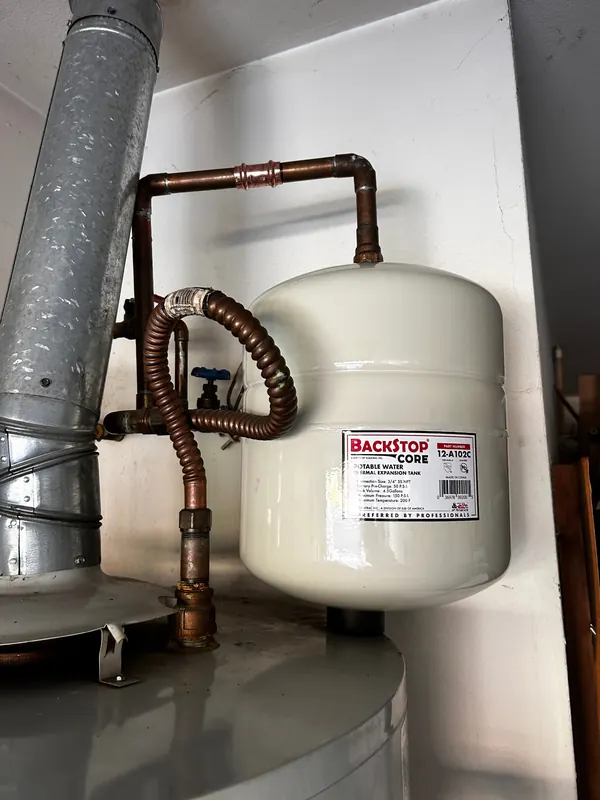
To swap out the stuck valve, we shut the heater down and drained it, cut out a section of the copper, and reworked a new section to take the new valve.
The expansion tank went on the cold line that feeds the heater. That's where it belongs: right beside the water heater, usually within a couple feet of where the cold supply enters it. We do come across tanks tied into the hot side on other installs, and that's wrong. It should always be on the cold side.
Going into the visit, the plan from Tony, one of our plumbers, was to finish by checking the home's water pressure and telling the homeowner the reading. He also planned to set the air charge in the expansion tank to match the house pressure, using a small electric pump he has for that.
Should I just replace the relief valve on an older heater?
If the heater is older and out of warranty, think it through before you pay for parts. A new valve doesn't make the rest of the heater any younger. We've seen one part get replaced, then another part fail soon after, or the tank itself start leaking.
Our Rancho Cucamonga water heater page covers when we recommend a repair and when replacing is the better call.
How can I tell if my water heater has an expansion tank?
Look at the pipes on top of the heater. An expansion tank is a small second tank tied into the water line there, like the one in the photo above.
If you can't find one, or water is dripping or pouring from the relief valve, have a plumber check it. Without an expansion tank, that pressure is still working on the rest of your plumbing.
If water is coming out of your relief valve in Rancho Cucamonga, see our Rancho Cucamonga water heater page or our main water heater repair and replacement page. If you think your whole house runs at high pressure, see our water pressure regulator page. Call (909) 600-4561.
Frequently Asked Questions
Need Help With Your Plumbing?
Regal Plumbing & Rooter serves Ontario, Rancho Cucamonga, Fontana, Pomona, Corona, Upland, West Covina, Chino and surrounding communities. Call us 24/7.
Call Now: (909) 600-4561