
A restaurant in Chino Hills called us because its kitchen floor sinks were draining slow and backing up onto the floor. Joseph and I went out. The lines were full of grease, and the reason traced back to the grease interceptor outside, which hadn't been pumped in many years. Our first try at jetting the floor sinks didn't work. The way to finish the job turned out to be outside, under the lids of that interceptor.
What happened when we tried to jet the floor sinks?
The building had no mainline cleanout we could get to, so our full-size jetter hose had no way into the line. The only way in was a small 1/4 inch hose run down through the P-trap of a floor sink drain. That small hose couldn't get through the amount of grease sitting in the line, so the jetting was unsuccessful.
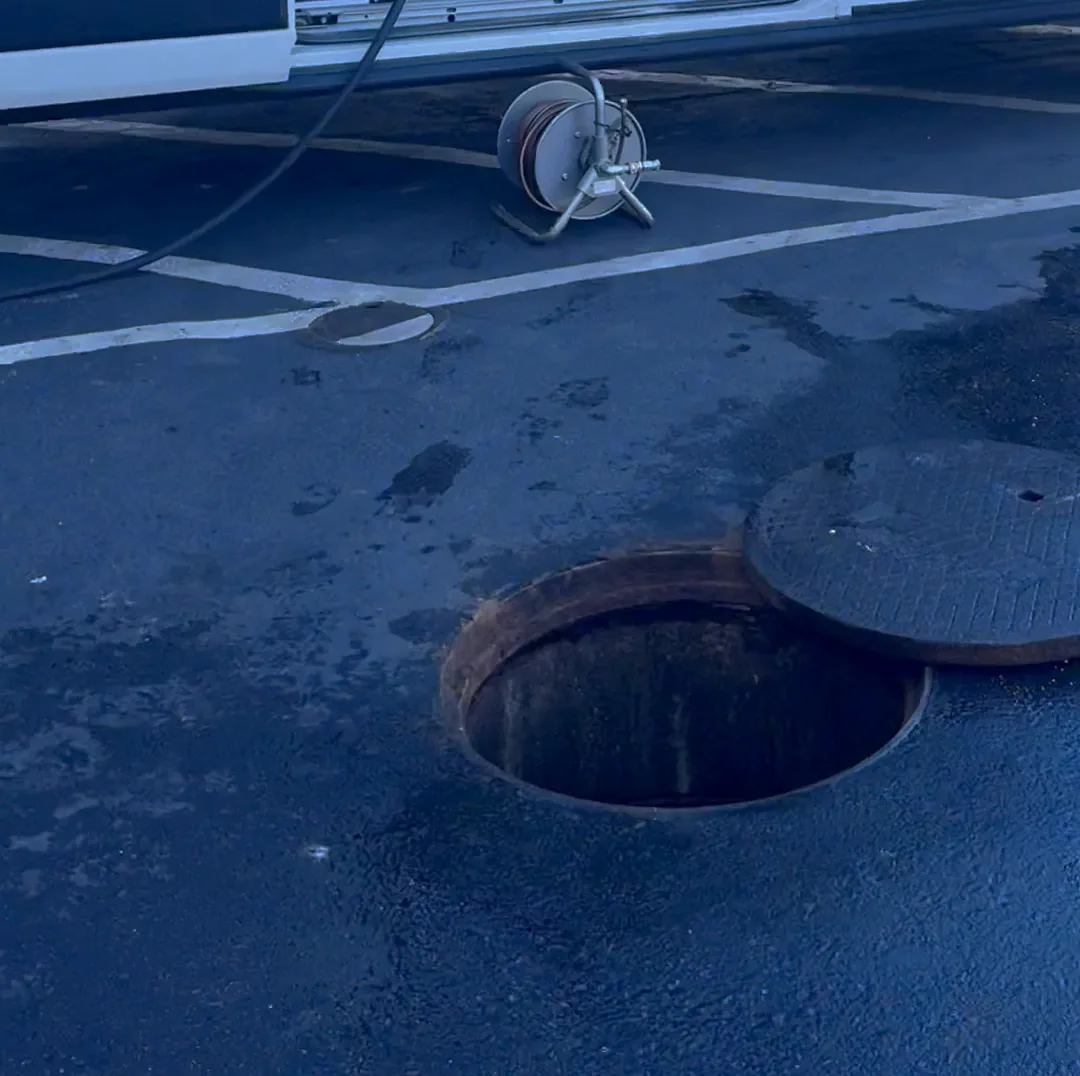
So we went to the grease interceptor, and I pulled the lids. This one holds about 1,500 gallons. The inlet compartment, the first chamber the kitchen water enters, was packed with grease, and that grease was covering the baffle openings. I explained to the person on site that the rest of the interceptor needed to be pumped before I could hydro jet the line properly.
What does a grease interceptor actually do?
Its job is to separate grease out of the water coming from the kitchen, so the grease stays out of the drain lines. Some restaurants have a small indoor unit of around 40 gallons. Others, like this one, have a large outdoor interceptor that holds around 1,500 gallons.
Either way, it has to be pumped often enough. When it isn't, the interceptor fills up and stops separating the grease. Grease then builds up in the kitchen lines until they clog. At this restaurant, the interceptor hadn't been pumped in many years, and that grease is what had the floor sinks backing up onto the floor.
Is the grease interceptor usually the problem?
In a lot of cases, yes. Plenty of restaurants don't keep their interceptor on a pumping schedule, and most of the time when we get called out to a restaurant, it's because the floor sinks aren't draining. So the first thing I ask is when the interceptor was last pumped.
How did we get the line clean?
First, the interceptor had to be pumped. I recommended having it professionally pumped, and the plan after the first visit was to come back in about three hours, once the pumping was done, and finish the jetting.
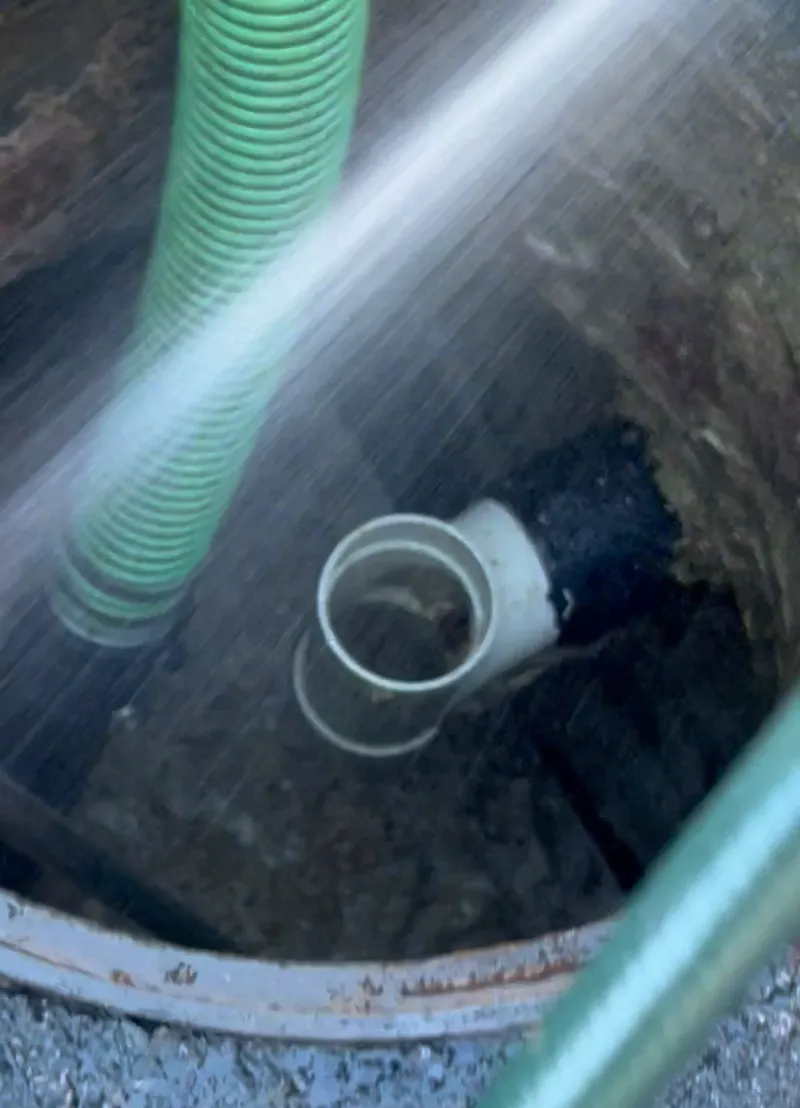
Once it had been pumped, we went into the main grease waste line from inside the interceptor, through the baffle tee where that line comes in. From there we hydro jetted upstream, in the direction of the back of the restaurant. Then we jetted the upstream branch lines that feed into it, to clean the system and improve flow. On this job we ran around 3,000 psi, which breaks the grease up and pushes it down to the interceptor. For more on how that works, see our hydro jetting page.
We also found that the P-trap under the rear floor drain was broken. It needs to be replaced, and we wrote it up as its own estimate.
Why does a restaurant need a mainline cleanout?
Without one, the grease line can only be reached through small openings: a floor sink P-trap with the 1/4 inch hose, or the inside of the interceptor once it has been pumped. Going in through the baffle tee cleaned the system and improved flow, but without a proper cleanout there's no way to guarantee every bit of grease comes out.
A dedicated cleanout on the main grease waste line gives the full-size jetter hose a direct way into the line, so it can be jetted correctly. That was our recommendation for this restaurant, and it still stands.
What should restaurant owners take from this?
On this job, a small hose through a floor sink couldn't get through the grease, and the line couldn't be jetted properly until the interceptor was pumped. If your floor sinks are backing up, start by finding out when the interceptor was last pumped. Keep it on a regular pumping schedule so it doesn't fill up and stop separating grease. If your building has no main cleanout on the grease line, ask about adding one so the line can be serviced the right way.
If your restaurant's kitchen drains are giving you trouble, see our commercial plumbing page, or our drain cleaning page for how we clear lines in general. Call (909) 600-4561.
Frequently Asked Questions
Related
Need Help With Your Plumbing?
Regal Plumbing & Rooter serves Ontario, Rancho Cucamonga, Fontana, Pomona, Corona, Upland, West Covina, Chino and surrounding communities. Call us 24/7.
Call Now: (909) 600-4561